
Spring 2026: Frankenstein
Home » 2026 Cohorts » Spring 2026: Frankenstein
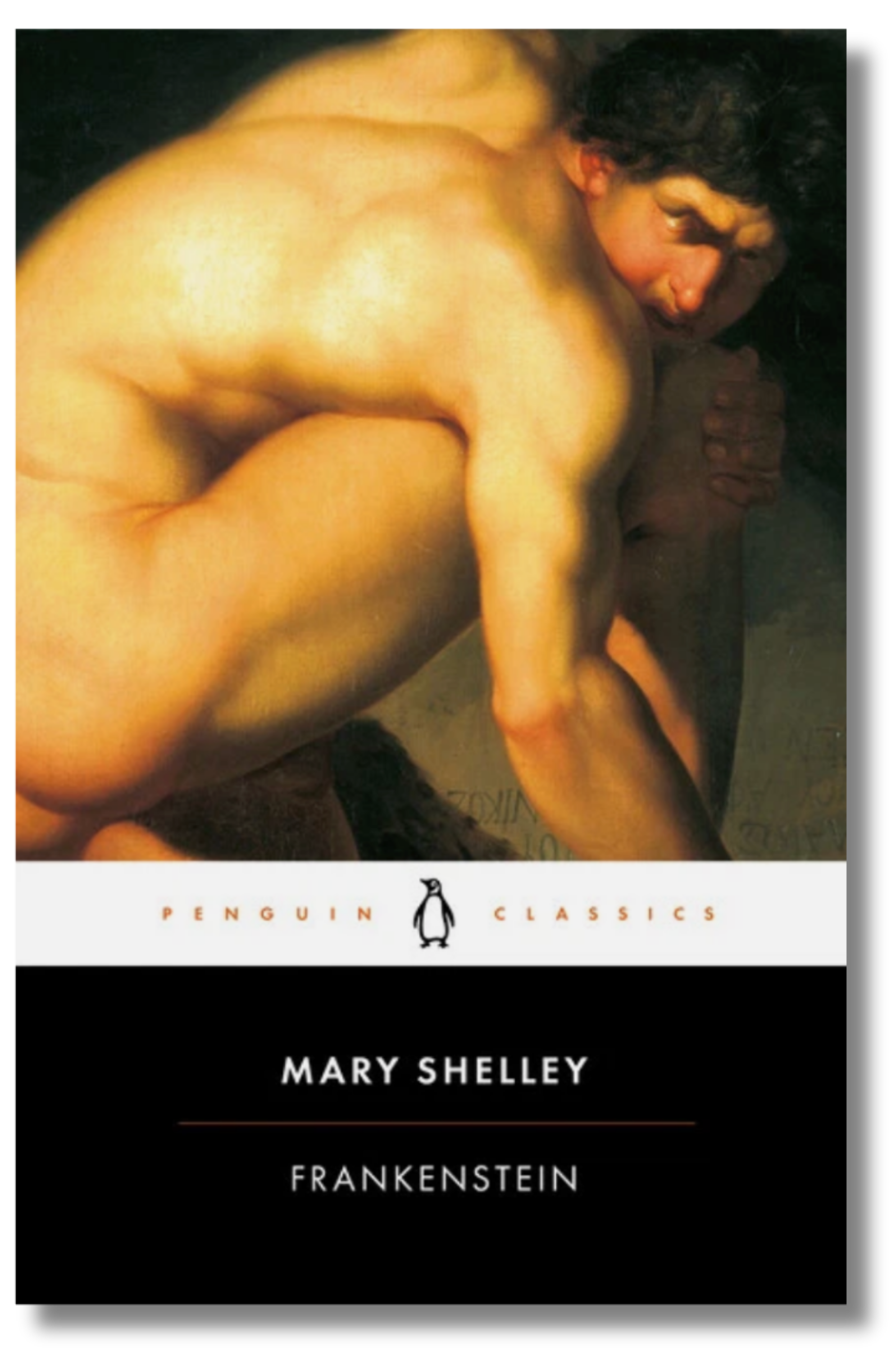
Read Mary Shelley’s 1819 novel Frankenstein
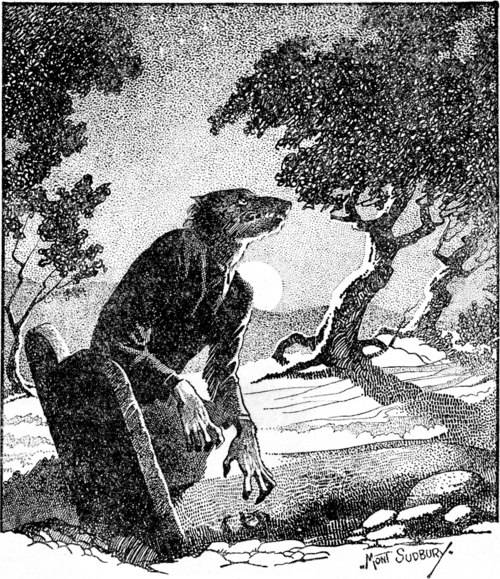
and pieces of visual artwork and objects on monsters—from medieval monsters like dragons, unicorns, and sea monsters to modern monsters like aliens, vampires, and werewolves.
Boris Karloff as Frankenstein’s Creature in a US postage stamp, 1940s.
“You are in the wrong,” replied the fiend; “and instead of threatening, I am content to reason with you. I am malicious because I am miserable. Am I not shunned and hated by all mankind? You, my creator, would tear me to pieces and triumph; remember that, and tell me why I should pity man more than he pities me? You would not call it murder if you could precipitate me into one of those ice-rifts and destroy my frame, the work of your own hands.
Shall I respect man when he condemns me?”
—Mary Shelley’s Frankenstein, Chapter 17
In this four-week course, students will engage in a deep reading of Mary Shelley’s novel, Frankenstein.

Details & Meeting Dates
Meeting Time: 1pm to 2:30pm PST / 4pm to 5:30pm EST
Cost: $299
Location: 🌀 Online via Zoom
Cohort III: Saturday Session Dates—Grades 9 and 10
Saturday, April 11, 2026
Saturday, April 18, 2026
Saturday, April 25, 2026
Saturday, May 2, 2026
Cohort IV: Sunday Session Dates—Grades 11, 12, & Pre-College
Sunday, April 12, 2026
Sunday, April 19, 2026
Sunday, April 26, 2026
Sunday, May 3, 2026
Text Edition & Artwork
Frankenstein, by Mary Shelley, Penguin Classics Edition
The Penguin Classics edition is based on the third edition of the novel, published in 1831, which includes an introduction and notes by Maurice Hindle, all the revisions Mary Shelley made to her story, as well as her 1831 introduction and Percy Shelley’s preface to the first edition.
Various Pieces of Visual Artwork & Objects on Monsters
The cohort will be assigned 5-7 selections of artwork and objects representing monsters—from medieval monsters like dragons, unicorns, and sea monsters to modern monsters like aliens, vampires, and werewolves—to observe and analyze. More information will be shared closer to the start date.
Exam Prep Relevance
Mary Shelley’s Frankenstein is a standard text included on the AP®, SAT®, and ACT® exams and a core text in college English classes.
Coaching Sessions
For Cohorts II-IV: Frankenstein, the Coaching Sessions will be available at various times on Mondays, Wednesdays, Fridays, and Sundays for ongoing mentorship and support.
Course Description
Why does Victor Frankenstein run away from The Creature he has made? How is language a theme in Frankenstein? What defines “the monstrous"? How does The Creature (as well as other monsters that we will look at) threaten, transgress, or represent “othered” bodies and communities?
Written in Geneva on a very rainy summer in 1816 (caused by weather patterns from the eruption of Mount Tambora in Indonesia), Frankenstein is one of the best-known works of literature written in the English language. The young Mary Shelley wrote it as a response to a dare: to come up with “a ghost story.” From this prompt, Shelley thought of a tale that fits with the classic Gothic horror novel, while also inventing the first science fiction novel of all time (the horror is caused by the product of science).
Frankenstein was also written in the midst of the first industrial revolution: at a time when there were debates about the boundaries of knowledge and risks of innovation. By encapsulating the current scientific and moral questions of her day, she managed to create a text that still belongs to us—that still offers us a modern myth and a symbol for the same kind of moral questions. What is the cost of invention? What responsibilities do creators have to what they have created? What makes “a monster”?
Cohort Learning Objectives
Read the entire novel of Mary Shelley’s Frankenstein with close attention to the language, plot, and ethical questions within the text.
Learn and practice dialogue skills, navigating through the text collaboratively to express opinions, ask questions, develop interpretations, and give confident answers.
Gain a strong understanding of what makes Frankenstein so enduringly fascinating, such as: its themes of sympathy, revenge, madness, and ambition; popular interpretations around the risks and dangers of science and technological advancements; and notions of monsters and monstrosity.
Engage in a comparative reading and analysis by looking at monster paraphernalia in the 20th and 21st centuries.
Deepen your reading practice and gain confidence in translating your solo study into a group setting, avoiding the assistance of external sources (except the footnotes and permitted external sources listed in our Program Policies).
Reading Assignments & Session Plan
Over the course of four sessions, we’ll peel back the layers of Mary Shelley’s Frankenstein, spreading out the reading over the first three weeks. We’ll conclude the cohort with a discussion on several pieces of “monster paraphernalia” and representations of “monsters” across time.
First Session: Read Frankenstein:
Author’s Introduction to the Standard Novels Edition (1831) by Mary Shelley
The Preface by Percy Shelley
Vol. 1, Letters 1-4
Vol. 1, Chapters 1-8 (pages 1-90)
Second Session: Read Frankenstein, Vol. 2, Chapters 1-8 (pages 91-151
Third Session: Read Frankenstein, Vol. 3, Chapters 1-7 (pages 156-225)
Fourth/Final Session: Spend time observing and analyzing 5-7 selections of artwork and objects representing monsters throughout history for analysis. More information will be shared closer to the start date.
For more details on what will happen each day in this reading flow, please take a look at the Day-to-Day Session Flow on our Program Structure page.
Join a Frankenstein Cohort!
Apply to Frankenstein by the deadline: April 4, 2026
Apply Early! All students who apply by March 28, 2026 will receive a 15% discount!