Mission & Founder
Home » Mission & Founder
The New Commons is an online program for high school students to deeply read core literary texts and participate in Socratic dialogue in small, tutor-led cohorts.

Our Mission
At a time when reading practices are dramatically changing, and literacy is declining, our mission is to offer a space where students from all backgrounds can become more fearless readers, collaborative learners, and empowered speakers through Socratic discussions on core literary texts. By using research-backed frameworks and a highly personalized approach, The New Commons helps students read full books and analyze them through play, exploration, and respectful group discussion.
Who We’re For
The New Commons was designed as a supportive extracurricular program for high school students to read core texts and practice structured, collaborative dialogue in tandem with their classwork.
During the school year, we hold small, short-term online book cohorts on weekends and outside of exam season. In the summertime, online book cohorts are held in three-week intensives. Each cohort is capped at six students. Learn more about the program structure on How It Works!
Throughout the course of the program, we support every student in their intellectual, creative, and academic pursuits, from the very first mentorship meeting to the last group session.
If you’re a 9th through 12th-grade student, or a newly graduated senior, who wants a personal, inclusive, and community-oriented space to read full texts and practice collaborative dialogue—
Welcome, this program is for you.
What You Get from The Program
1. Book Cohort Membership
Students apply to join small, short-term online book cohorts, which will gather around core texts and commit to reading the whole book. As a member of the cohort, each student will bring their knowledge and experience of the text, attend each session, and engage in dialogue.
These cohorts are always capped at six students, so apply early!
2. Reading Accountability
Students will read a full text, not to write an essay or get quizzed on an exam, but for the sake of learning, dialogue, and discovery. Using our reading and discussion guides, students will be well-equipped to spend longer time periods in deep reading and thought, to show up to sessions to discuss that reading experience, rather than to have the “right” answer.
3. Mentorship in Coaching Sessions
Mentorship is at the heart of the program. We provide ongoing one-on-one support for each student's unique questions, challenges, and experiences. In 30-minute guided conversations, students check in with the founder, Lauren, on reading progress, develop strategies for participation, and explore themes and topics that have been important in their reading.
Founder & Tutor
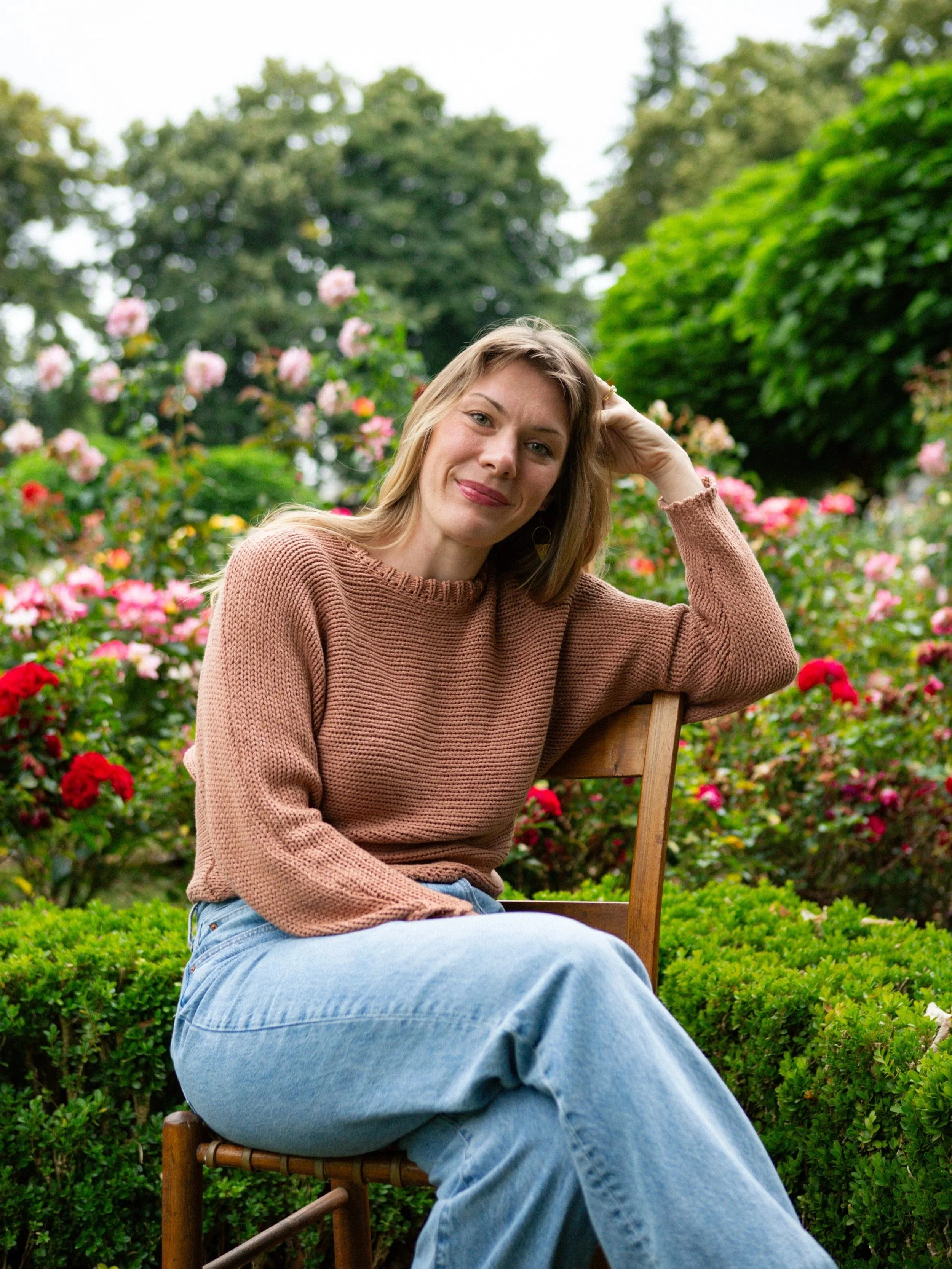
The New Commons was founded in 2026 by Lauren Frey, a lifelong reader, trained academic, and experienced facilitator, with a passion for dialogue and love for the humanities.
Education
As an undergrad, I was a passionate journalism-turned-English major at a small liberal arts college in Los Angeles, where I was also a student in a discussion-based Great Books Program.
During those four years, I read hundreds of books, wrote dozens of papers, and spent (literally) hundreds of hours in peer-to-peer dialogue. I also studied abroad at Oxford University for a semester, which gave me direct experience with the tutorial system. All of these experiences have deeply informed the vision and mission behind The New Commons.
After I graduated, I moved to Washington, D.C., where I received my M.A. in English with Distinction from Georgetown University in 2019 and was a Lannan Poetry Fellow.
Long-form seminar discussions were always at the heart of this program, too, which I loved — and it solidified for me that well-facilitated dialogue around core texts was essential to my own teaching philosophy.
Career
After receiving my master’s degree, I decided to leave academia. Instead, I found myself in an exciting but unexpected career: public health communications consulting.
Over the next five years (and throughout the COVID-19 pandemic), I took on senior roles, working with Directors at the NIH to leaders in Medicaid and Behavioral Health in Oregon, managing teams and training fresh graduates, and doing incredible work with amazingly smart and talented people.
After six years in the corporate world, I knew I wanted to reinvent my career and return to my love for literature and the humanities. I just didn’t know what that would look like yet.
The Seed of an Idea
In June 2025, I was sitting on the bench outside a community garden in Portland, where I was meeting a friend for our first volunteer adventure together.
My phone buzzed with a notification. It was a headline from The New Yorker: “What’s Happening to Reading?” by Joshua Rothman. I opened it immediately, and by the time my friend pulled up her car, I’d read it in its entirety.
As we were given the task to harvest sweet peas and tear down dead vines, the article’s main question was tugging at me: Why read when AI can do it for you? What happens when reading becomes more automated?
These questions led to the germination of an idea for a discussion-based reading program. I wanted to create an accessible, supportive program where high school students could get earlier exposure to low-pressure yet intentional, well-facilitated spaces to practice rigorous reading and meeting in long-form dialogue.
Eight-months later, The New Commons was born.
Whether you’re a student or a parent, I’m so grateful you’re here; we’re asking these questions together. If you choose to apply, I couldn’t be more excited to be on this reading journey with you.
-
I was born and raised just outside of Portland, Oregon. I attended Clackamas High School, where I sang in the A-Choir and proudly played the illustrious role of Factory Woman #3 in a production of Les Misérables.
The book that first transformed my experience of reading and opened my eyes to the beauty of language and storytelling was Their Eyes Were Watching God by Zora Neal Hurston, which I read in my 11th-Grade AP Lit class. Now, many years later, I am so excited to teach this book in The New Commons in Summer 2026.
My favorite book of all-time is Circe by Madeline Miller, a feminist revision of the Greek myth.
In June 2025, I married my partner, a Massachusetts native, on the Columbia River Gorge. We love our ties to both the East and West Coasts!
-
M.A. in English with Distinction, Georgetown University, 2019.
Thesis earned distinction and resulted in publication in an international journal, Textual Cultures.
B.A. in English, Biola University, 2017, magna cum laude.
Member of Torrey Honors College, graduated with distinction.
Semester at Oxford University, studying British Literature, Philosophy of Science and Social Science.
The New Commons is deeply indebted to so many authors, teachers, journalists, and organizations whose work has informed this program. The latest sources and research areas will be updated here frequently.
Research & Sources
-
Eagleton, Terry. Literary Theory: An Introduction. Oxford: Basil Blackwell, 1983.
Foster, Thomas C. How to Read Literature like a Professor. New York: HarperCollins, 2013.
Harris, Joseph D. A Teaching Subject: Composition Since 1966, New Edition. Utah State University Press, 2012.
Henning, John E.The Art of Discussion-Based Teaching: Opening Up Conversation in the Classroom. New York: Routledge, 2008.
hooks, bell. Teaching to Transgress: Education as the Practice of Freedom. New York: Routledge, 1994.
Wolf, Maryanne. Reader, Come Home: The Reading Brain in a Digital World. New York: Harper. 2018.
Sarkar, Advait. “How To Define An Elephant: Reflections of a Cambridge Supervisor.” 2017.
-
Astor, Maggie. “Fewer People Are Reading for Fun, Study Finds.” The New York Times, August 20, 2025. https://www.nytimes.com/2025/08/20/well/reading-pleasure-decline-study.html
Goldstein, Dana. “Kids Rarely Read Whole Books Anymore. Even in English Class.” The New York Times, December 12, 2025. https://www.nytimes.com/2025/12/12/us/high-school-english-teachers-assigning-books.html
Hsu, Hua. “What Happens After A.I. Destroys College Writing?” The New Yorker, June 30, 2025. https://www.newyorker.com/magazine/2025/07/07/the-end-of-the-english-paper.
Hunter, Walt. “Stop Meeting Students Where They Are.” The Atlantic, February 2, 2026. https://www.theatlantic.com/ideas/2026/02/youth-reading-books-professors/685825/
Kahloon, Idrees. “America Is Sliding Toward Illiteracy.” The Atlantic, October 14, 2025. https://www.theatlantic.com/ideas/archive/2025/10/education-decline-low-expectations/684526/.
Rothman, Joshua. “What's Happening to Reading?” The New Yorker, June 17, 2025. https://www.newyorker.com/culture/open-questions/whats-happening-to-reading.