Reading Pride and Prejudice: On Humiliation, Humility, and Happily Ever Afters
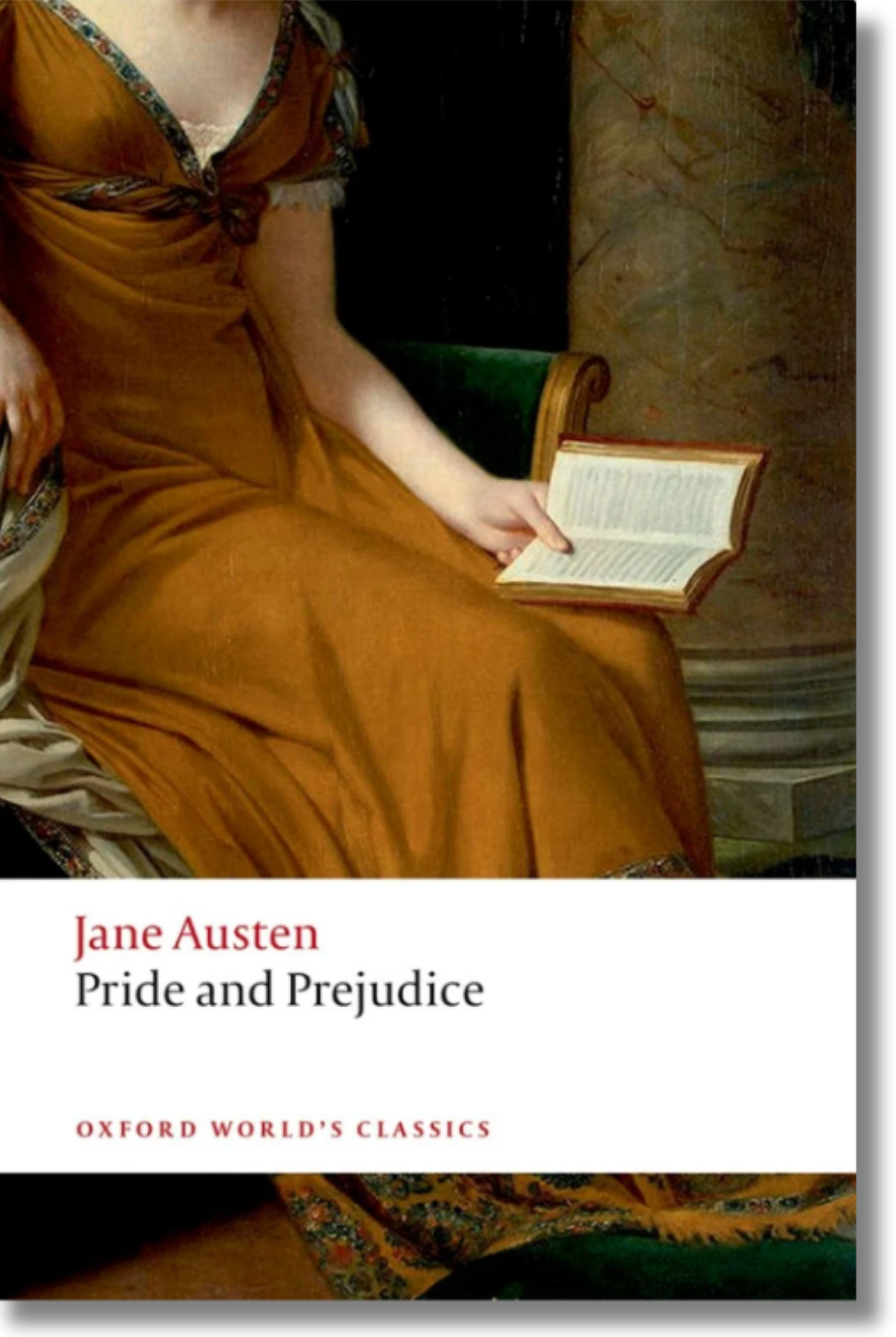
Published in the early 19th century, Pride and Prejudice has persisted in the cultural imagination for over 200 years. Yet the novel does not present itself as belonging to what we would term the “romance” genre today. Rather, the love story unfolds within Austen’s characteristic searing-yet-sincere examination of wealth, class and gender dynamics in the upper social strata of Regency England.
This September, we’re excited to offer two four-week cohorts on Sunday and Mondays evenings, where we’ll be slow-reading Pride and Prejudice using the Oxford World’s Classics edition.
Come join us for this warm and collaborative discussion, starting September 6 and September 7, taught by Marisa Lainson, MFA. More details below!
Join us for a four-week cohort on Pride and Prejudice this September!
“I was reminded that literature belongs to me as much as it belongs to the experts, and that reading, exploring and questioning it intentionally, in community, is not merely educational but joyful and applicable to my life and work.”
— Elaine G.
SUNDAYS:
Dates: September 6, 13, 20, and 27
Times: 10:00 - 11:30am PT
MONDAYS:
Dates: September 7, 14, 21, and 28
Times: 6:30 - 8:00pm PT
Details: https://www.thenewcommons.com/prideandprejudice
Location: Virtual via Zoom
Instructor: Marisa Lainson
Use “FOUNDINGMEMBER” for 20% off on this cohort and on all cohorts you register for in the future. This membership is available to all who join a cohort by December 31st.
What you’ll get from the course
You’ll have a well-paced reading schedule of Pride and Prejudice (about 120 pages/week), with plenty of time to pay close attention to the language, plot, and questions within the text. The opening questions will focus on the following ideas:
Session #1: A Study in Self Deception
Session #2: Humiliation and Humility
Session #3: On “Marrying Up”
Session #4: Eavesdroppers, Rainstorms and Wildflower Fields
In each guided session, you’ll experience a community-oriented reading practice, with opportunities to participate and contribute in a variety of ways—with knowledgeable guidance and personal encouragement from the facilitator. We’ll use the text collaboratively to ask and answer questions, develop interpretations, and build collective meaning (or collective ambiguity!)
In the final session, we’ll watch Joe Wright’s 2005 film adaptation of Pride and Prejudice. Through this comparative analysis, the group will deepen their understanding of the novel to explore how iteration and alterations for a different medium expose new tensions within the work, as well as to situate it within a new artistic context.
You’ll leave this cohort with a strong understanding of Pride and Prejudice, and have ways to return, including: (1) unique recaps on each discussion, (2) a record of what you loved as a reader, (3) your responses to creative writing, research, and journal prompts that we design for each session, and (4) ways to stay connected to your cohort members.
Published in the early 19th century, Pride and Prejudice has persisted in the cultural imagination for over 200 years, with the now-archetypal Elizabeth Bennet and Mr. Darcy revered as one of the greatest love stories of all time. Yet the novel does not present itself as belonging to what we would term the “romance” genre today; rather, the love story unfolds within Austen’s characteristic searing-yet-sincere examination of wealth, class and gender dynamics in the upper social strata of Regency England.
Opening with a comedic interplay between the absurd Mrs. Bennet and the aloof Mr. Bennet, who continually amuses himself at his wife’s expense, the novel does not introduce us to our famous lovers until three chapters in—where one overheard, prideful comment plants the seed of prejudice that incites the next 300 pages of stirring desire and self-deception, humiliation and humility, and, eventually, after several swings and misses, marital bliss.
We join our lovers on their journey from misunderstandings to matrimony, their transformations from “not handsome enough to tempt me” to “how ardently I admire and love you;” from “I could easily forgive his pride, if he had not mortified mine,” to “for herself she was humbled; but she was proud of him.”
Austen began the novel under the title of First Impressions in the 1790s and eventually published it, anonymously, by selling the copyright for a lump sum in 1813—only four years before her illness and early death. While Austen saw modest success as a writer within her lifetime, the intervening centuries have since elevated her name among the literary greats, with Pride and Prejudice resonating with generations of readers as a tale, ultimately, of the journey from self-deception towards self-knowledge—and how we can find, if we’re lucky, both love and a bit of levity along the way.
Pride and Prejudice, by Jane Austen, the Oxford World Classics Edition.
- This edition of Pride and Prejudice, edited by James Kinsley with an introduction from Christina Lupton, includes updated notes, chronology, and a bibliography.
Pride and Prejudice (2005), directed by Joe Wright.
- The 2005 film Pride and Prejudiceis one of many, many adaptations. On a scale of more to less faithfulness to the book, Joe Wright’s version largely adheres but makes some key deviations, both as necessitated by the condensed medium and as chosen for increased drama. How are these scenes different from the books? How are they similar? Do these deviations alter our understanding of the characters or Austen’s themes? We’ll examine elements that are common to both books and movies as media (setting, dialogue) as well as elements that are unique to the medium of film (musical score, casting, visual effects).
The Details
-
Over the course of four sessions, we will read Pride and Prejudice, ending the cohort with a final critical discussion on the Joe Wright adaptation.
First Session: Read Volume I
Second Session: Read Volume II
Third Session: Read Volume III
Fourth and Final Session: Watch and discuss the 2005 film adaptation, Pride and Prejudice, directed by Joe Wright.
-
This cohort has eight seats available, to make that each person has plenty of chances to participate!
-
Pride and Prejudice is being offered as a four-week course in September 2026 via Zoom.
Cohort 1: Sundays, September 6, 13, 20, and 27: 10AM - 11:30AM PT
Cohort 2: Mondays, September 7, 14, 21, and 28: 6:30 - 8:00PM PT
You can visit each specific book cohort page above and within our community for specific meeting dates and times.
-
All cohorts will meet online via Zoom.
-
Four-week cohorts are $249/seat and three-week cohorts are $195/seat, often with discounts available!
Registering in 2026 makes you a Founding Member, for which we are so grateful! Use “FOUNDINGMEMBER” for 20% off any cohort by December 31, 2026, and you’ll receive 20% off all our cohorts forever.
If the costs are still out of range for you, send Lauren an email! We are price-conscious program, and want to offer as many opportunities for readers to join us.
“What I do not owe you! You taught me a lesson, hard indeed at first, but most advantageous. By you, I was properly humbled. I came to you without a doubt of my reception. You shewed me how insufficient were all my pretensions to please a woman worthy of being pleased.”
— Pride and Prejudice, Jane Austen
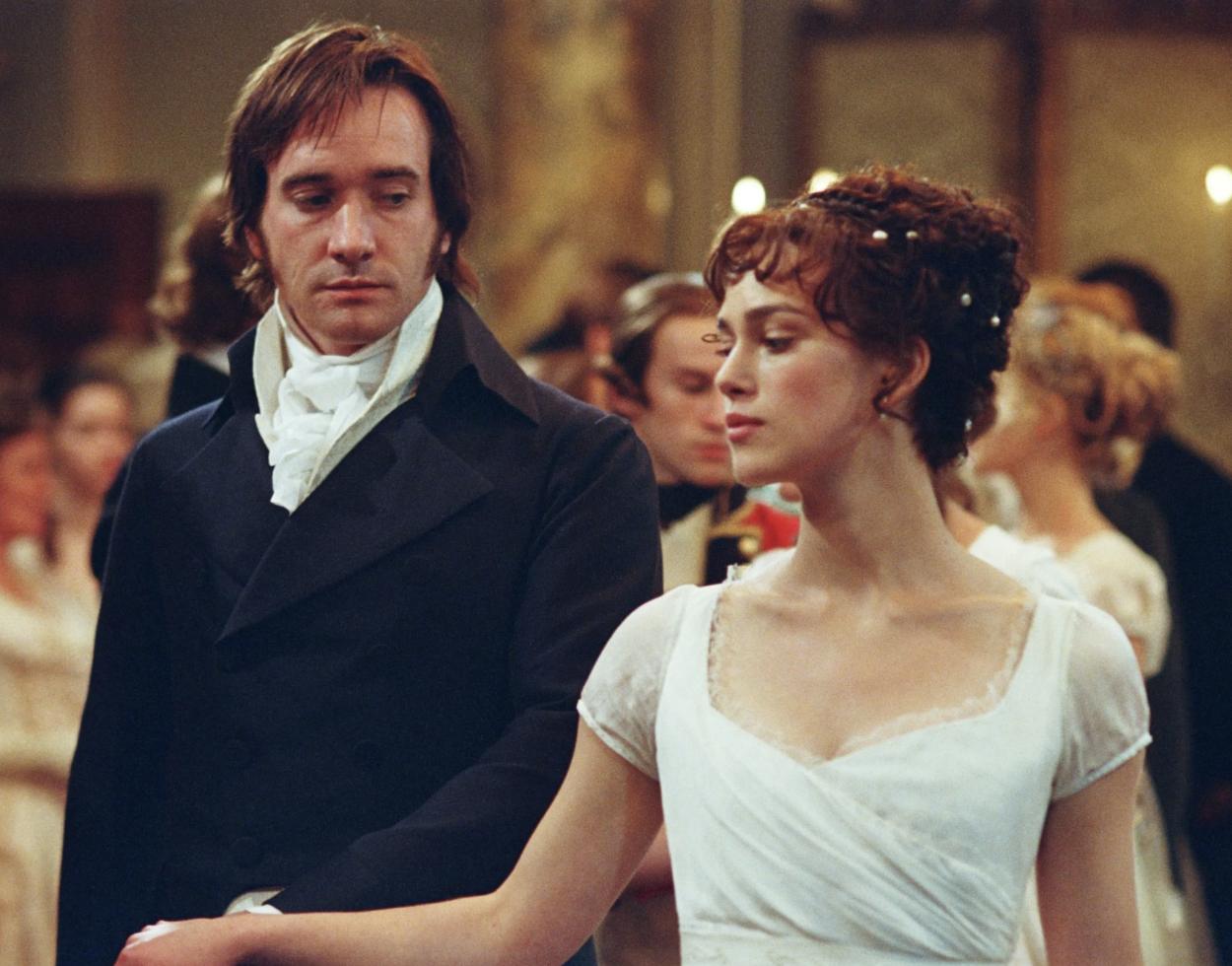
Marisa Lainson is the Instructor of the Pride and Prejudice cohorts.
She is a writer, editor and educator with a passion for media literacy, rhetorical argument and both classic and contemporary literature, and a Founding Instructor of The New Commons. They hold an MFA in English from the University of California, Irvine, where they taught writing, rhetoric and research as a graduate instructor.

Join us for a four-week cohort on The Odyssey this August!
TUESDAYS:
Dates: August 18, 25, September 1, 8
Times: 5 - 6:30PM PT
WEDNESDAYS:
Dates: August 19, 26, September 2, and 9
Times: 6:30 - 8pm PT
Details: https://www.thenewcommons.com/theodyssey
Location: Virtual via Zoom
Instructor: Julian Mammano
Use “FOUNDINGMEMBER” for 20% off on this cohort and on all cohorts you register for in the future. This membership is available to all who join a cohort by December 31st!