High School Student Track
At a time when reading practices are changing and literacy is declining, our mission is to offer a personalized space where high students from all backgrounds can become more fearless readers, collaborative learners, and empowered speakers through dialogue on literary texts.
Our instructors come with a highly personalized approach and years of experience in facilitation and being at the front of the classroom to help students read full books and analyze them through play, exploration, and respectful group discussion.

Our Curriculum
We always offer book cohorts on Classical Texts (e.g., Jane Eyre) and/or Modern Classics (e.g. Of Mice and Men) within our High School Student Track.
These books are transferable to the reading comprehension and writing portions of the AP®, SAT®, and ACT® exams, as well as to college-level English literature courses.
Our final session will always put those texts into conversation with a work of art.
Our Core Program Features
Small Cohorts of Seven People
Cohorts are designed to be small to make sure the space is truly inclusive for everyone who enrolls.
Expert Instruction & Clear Learning Objectives
While no two cohorts or dialogues will be the same, our instructors spend many hours designing the curriculum and key learning objectives for each book we read.
Guidance Materials
To create a shared culture and ethos within our learning community, we have created several guidance documents to provide shared frameworks.
Features of the High School Student Track
The Online Community Platform
-
Instructors hold weekly cohort-specific Office Hours to support a personalized approach in each student’s intellectual, creative, and academic pursuits. During these meetings, we’ll check in on reading progress, develop strategies for participation, explore themes and topics that have been interesting or challenging, and—if helpful—discuss resources and pathways for academic and career ambitions. We aim to help students feel more confident in navigating what comes next—in the cohort, in their high school classes, in exam prep, and beyond.
-
Students are given pre-made writing prompts as well as options to continue writing into questions that we have “pulled” from the discussion.
The prompts are intended to stimulate additional learning individually, with the option of students keeping the discussion going in an online chat thread that the Instructor will start in our online community forum.
-
All returning students will have ongoing early-enrollment access to future book cohorts, with a 15% off discount, via the Circle platform.
-
As an online platform, the High School Student Community is a completely separate, private space. We have implemented privacy features and created “Hidden” spaces on the Circle platform to ensure that the high school students and adult readers are never visible to one another. These are essentially two separate platforms/programs that have zero crossover in terms of online interaction.
Within the High School Student Track, students can only interact with each other in real-time call spaces such as Office Hours and Book Cohort Sessions.
All personal profile information — location, contact information, name, and photo — will be private and is only visible to the admins.
Supplemental Learning & Educational Resources

More coming soon!
Record of Achievement
-
We will recognize and record the accomplishment of completing a book cohort by awarding a non-accredited Certificate of Completion to students who fully participate!
See our Program Policies for details on the participation requirements.
Upcoming Book Cohorts
JUNE 2026
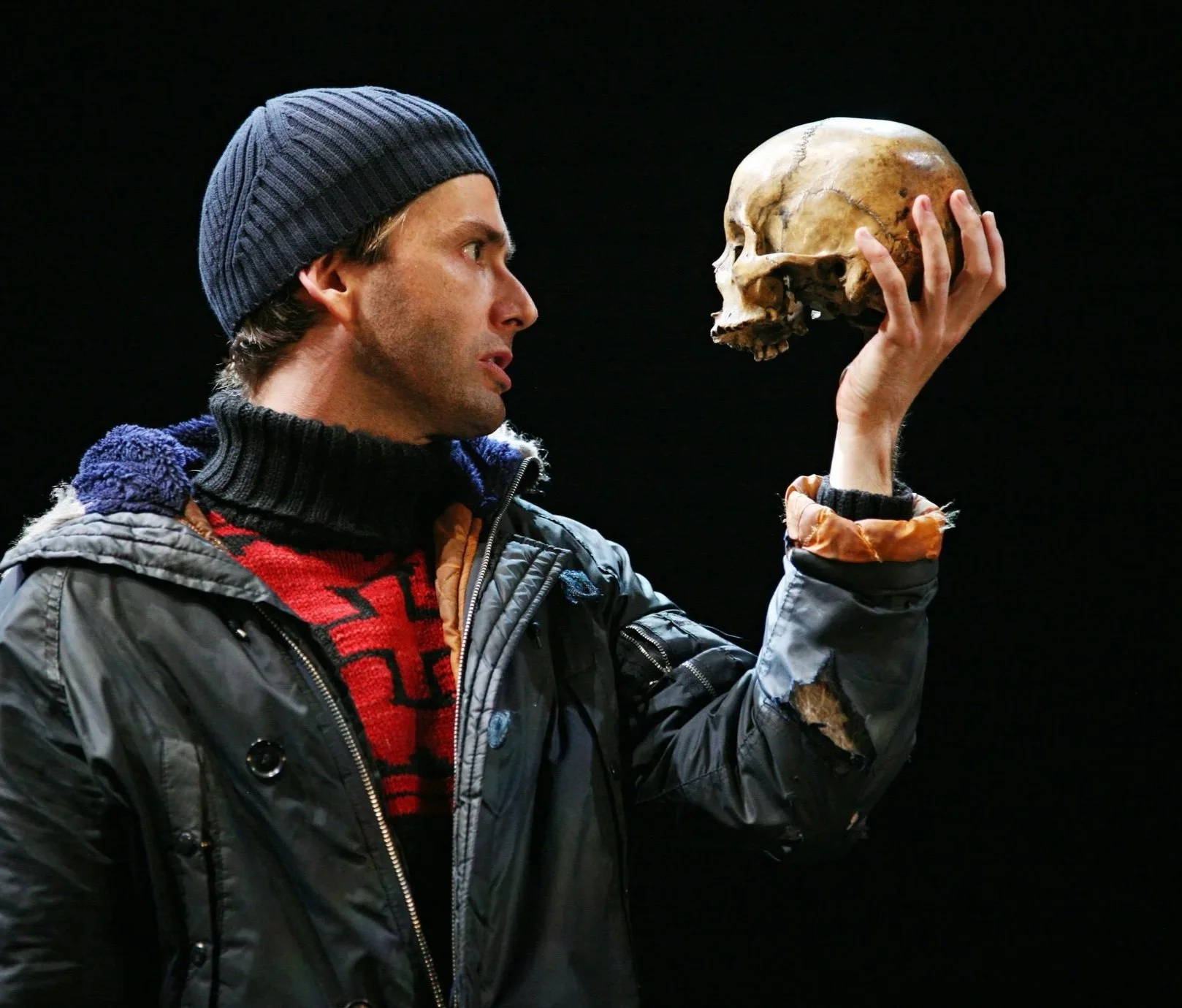
Why does Hamlet delay revenge? Is Hamlet really “mad”? What exactly is Gertrude guilty of? Wait, who’s Fortinbras, and why is there a geopolitical side-plot?
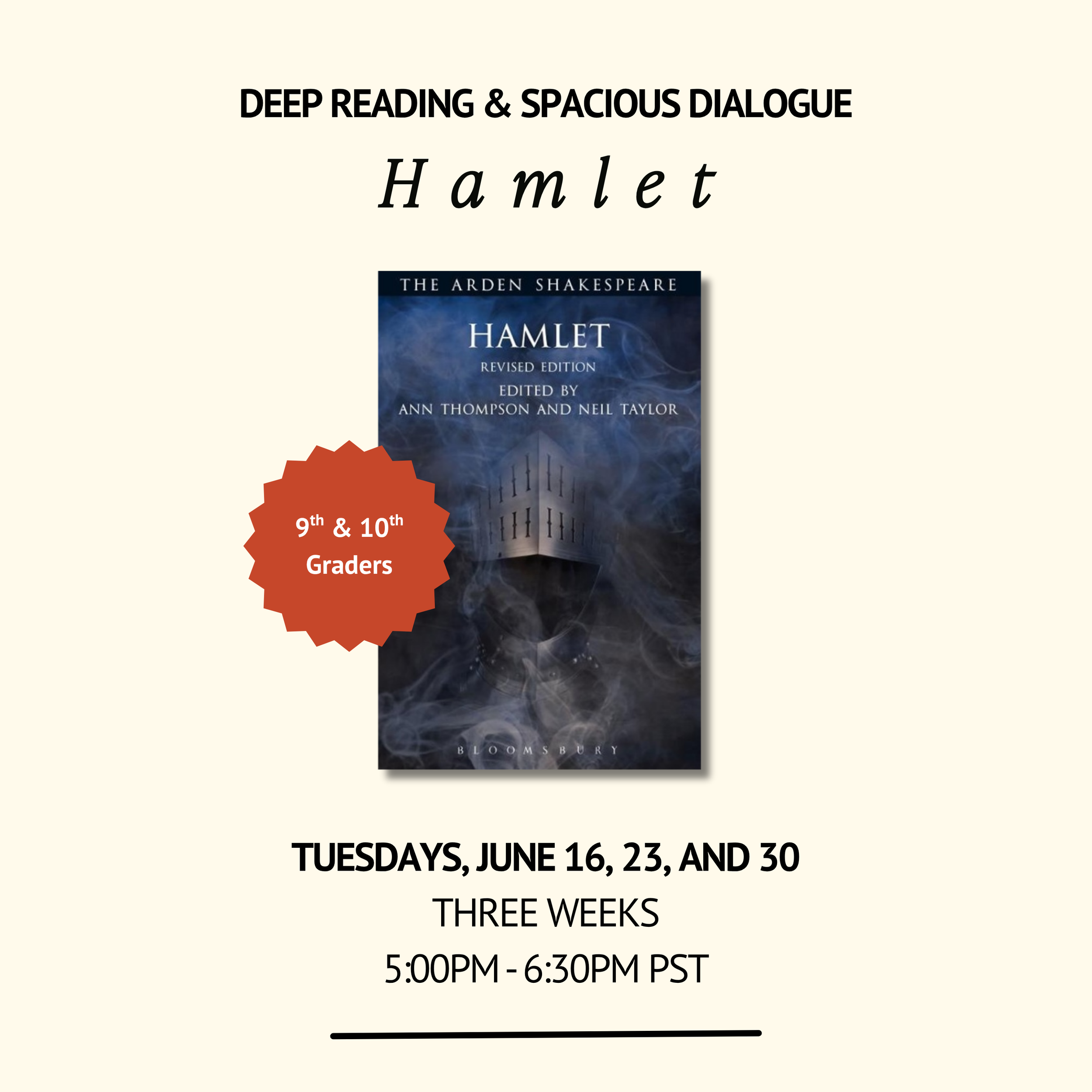
Incoming 9th and 10th graders are invited to join us for a three-week book cohort on Shakespeare’s Hamlet this June.
Session Dates: Tuesdays, June 16th, 23th, and 30th, 2026
Session Times: 5:00PM - 6:30PM PST.
Course Details: https://www.thenewcommons.com/hamlet
Location: Virtual via Zoom
Instructor: Lauren Frey, M.A.
Cohort Seats: Seven students
Use code EARLYBIRD by May 31st to receive a 10% discount on your seat! We can’t wait to meet you, talk with you in session, and support your learning goals this summer.
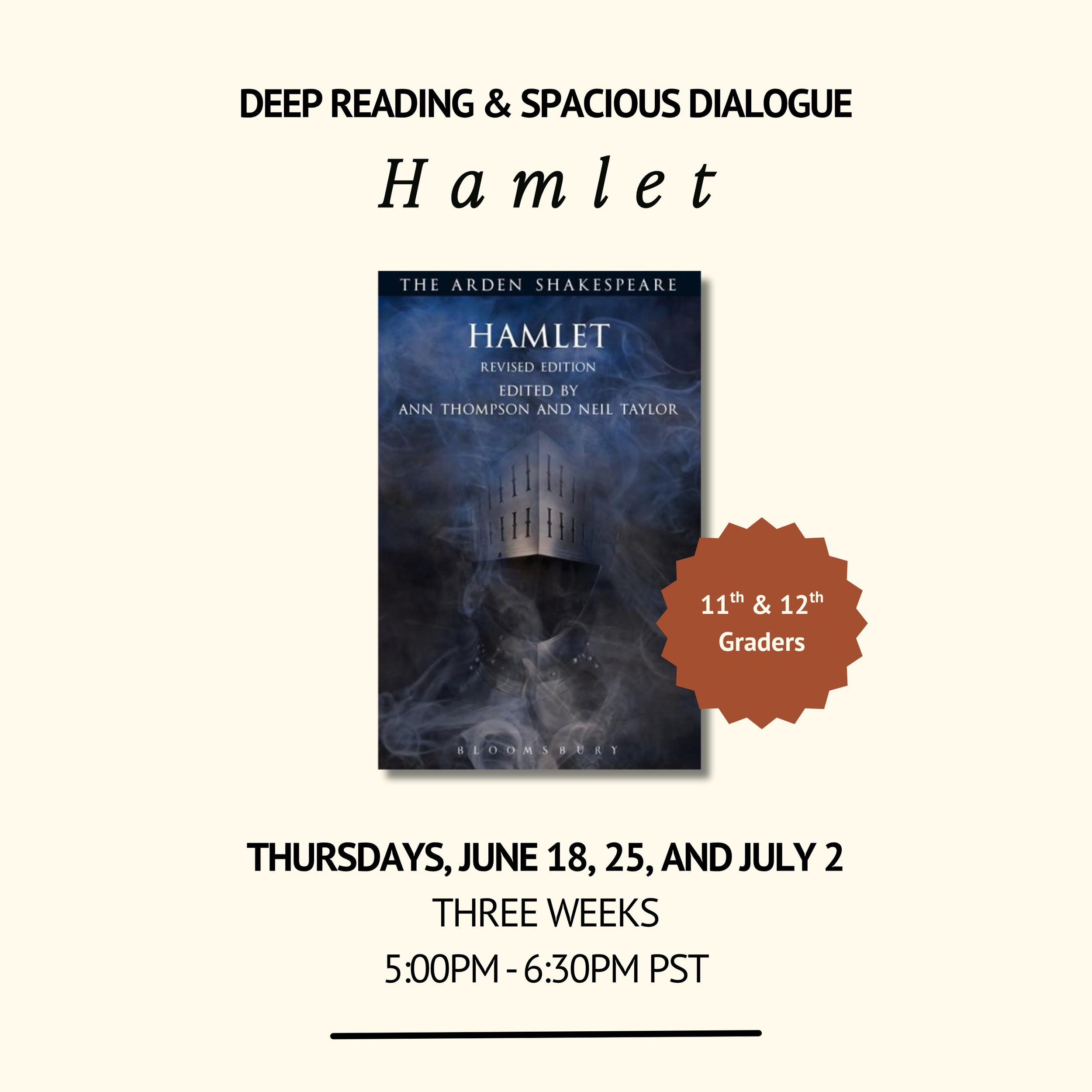
Incoming 11th and 12th graders are invited to join us for a three-week book cohort on Shakespeare’s Hamlet this June.
Session Dates: Thursdays, June 18th, 15th, and July 2nd, 2026
Session Times: 5:00PM - 6:30PM PST.
Course Details: https://www.thenewcommons.com/hamlet
Location: Virtual via Zoom
Instructor: Lauren Frey, M.A.
Cohort Seats: Seven students
Use code EARLYBIRD by May 31st to receive a 10% discount on your seat! We can’t wait to meet you, talk with you in session, and support your learning goals this summer.
JULY 2026

Why does Victor Frankenstein run away from The Creature he has made? How does language itself become theme in Frankenstein? What defines “the monstrous"? How does The Creature threaten, transgress, or represent “othered” bodies and communities?
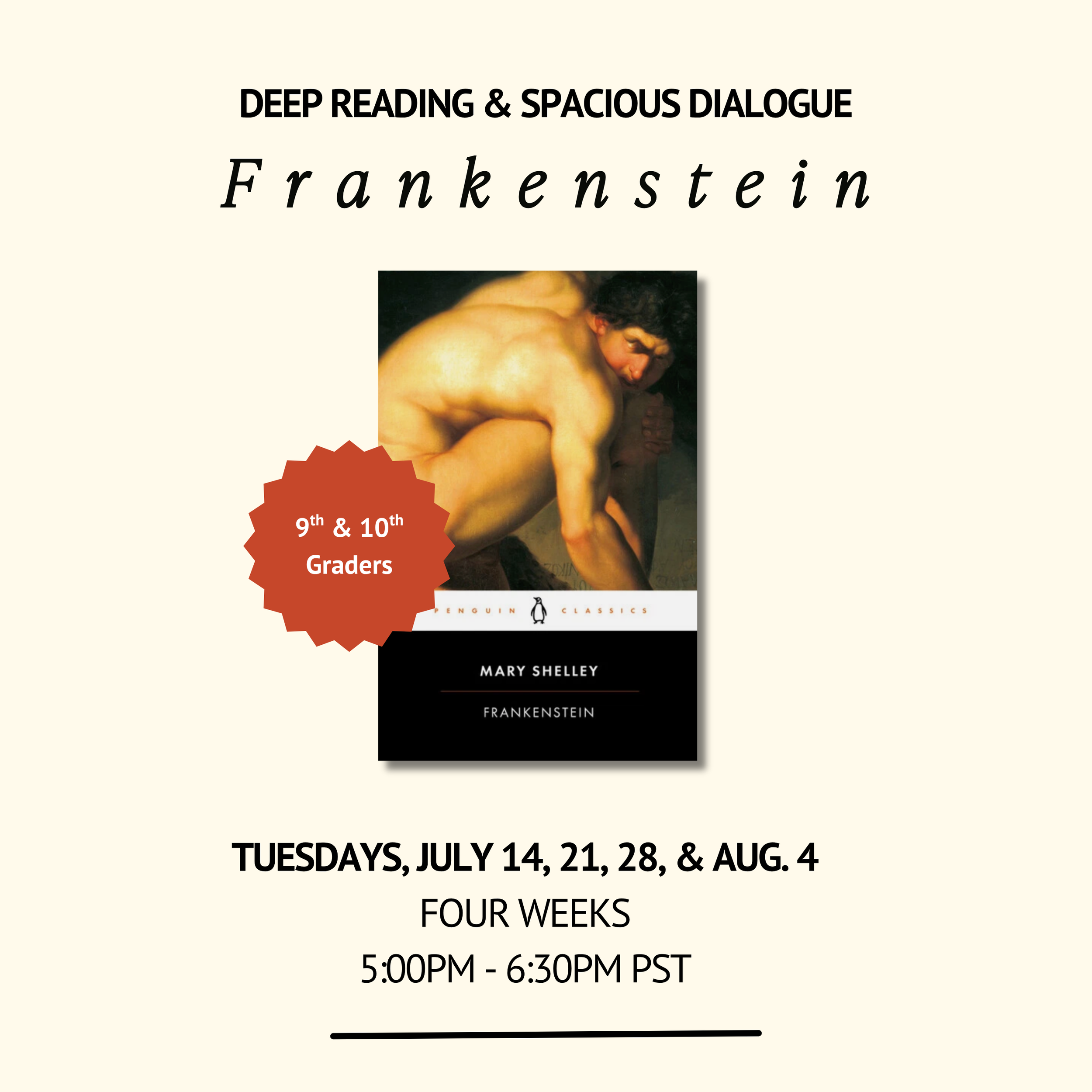
Incoming 9th and 10th graders are invited to join us for a four-week book cohort on Mary Shelley's Frankenstein this July.
Session Dates: Tuesdays, July 14th, 21st, 28th, and August 4th, 2026
Session Times: 5:00PM - 6:30PM PST.
Course Details: https://www.thenewcommons.com/frankenstein
Location: Virtual via Zoom
Instructor: Lauren Frey, M.A.
Cohort Seats: Seven students
Use code EARLYBIRD by June 30th to receive a 10% discount on your seat! We can’t wait to meet you, talk with you in session, and support your learning goals this summer.
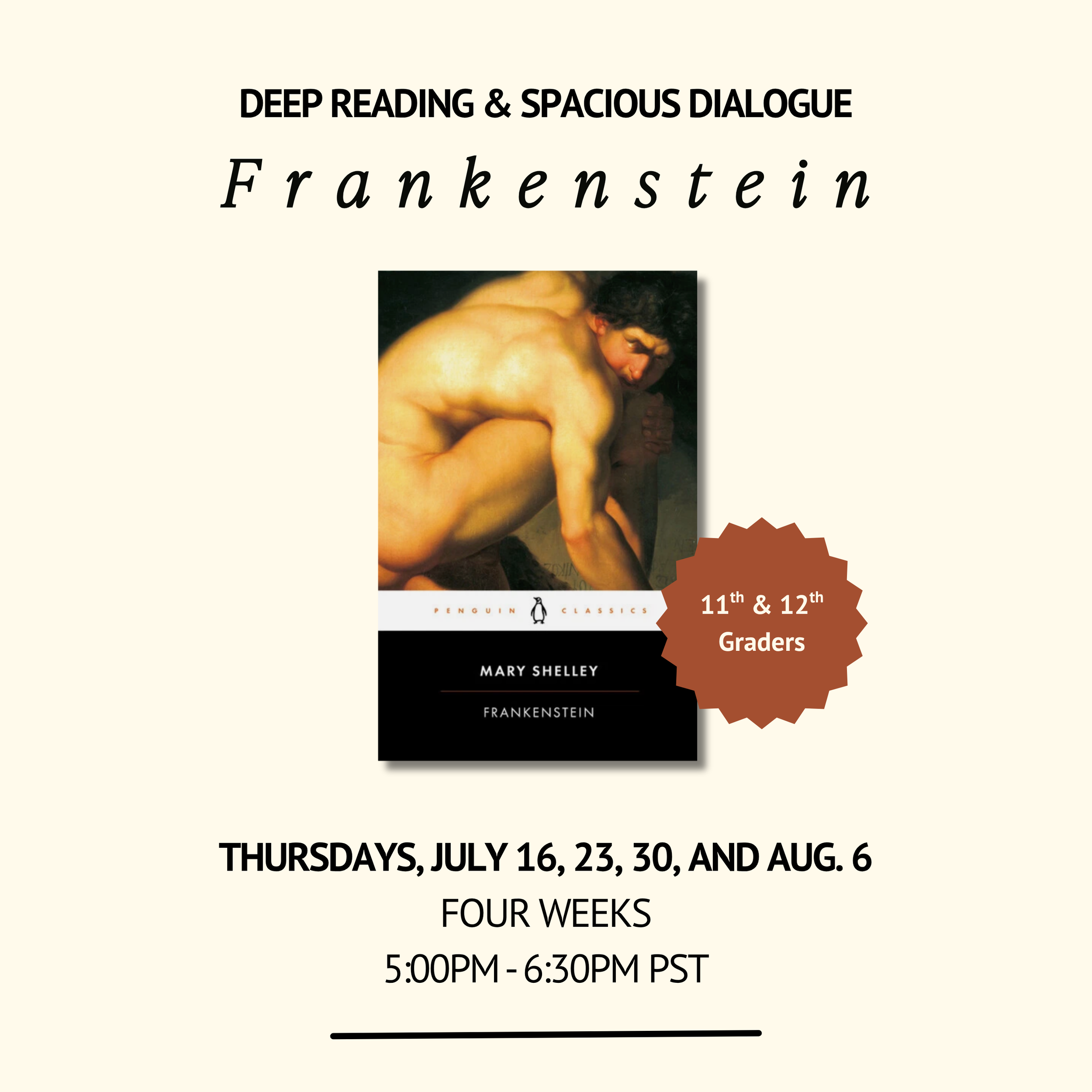
Incoming 11th and 12th graders are invited to join us for a four-week book cohort on Mary Shelley's Frankenstein this July.
Session Dates: Tuesdays, July 16th, 23rd, 30th, and August 6th, 2026
Session Times: 5:00PM - 6:30PM PST.
Course Details: https://www.thenewcommons.com/frankenstein
Location: Virtual via Zoom
Instructor: Lauren Frey, M.A.
Cohort Seats: Seven students
Use code EARLYBIRD by June 30th to receive a 10% discount on your seat! We can’t wait to meet you, talk with you in session, and support your learning goals this summer.
“When I look back, I am so impressed again with the life-giving power of literature. If I were a young person today, trying to gain a sense of myself in the world, I would do that again by reading, just as I did when I was young.”