In this cohort, students will engage in a deep reading of Mary Shelley’s novel, Frankenstein.
Why does Victor Frankenstein run away from The Creature he has made? How is language a theme in Frankenstein? What defines “the monstrous"? How does The Creature (as well as other monsters that we will look at) threaten, transgress, or represent “othered” bodies and communities?
Written in Geneva on a very rainy summer in 1816 (caused by weather patterns from the eruption of Mount Tambora in Indonesia), Frankenstein is one of the best-known works of literature written in the English language. The young Mary Shelley wrote it as a response to a dare: to come up with “a ghost story.” From this prompt, Shelley thought of a tale that fits with the classic Gothic horror novel, while also inventing the first science fiction novel of all time (the horror is caused by the product of science).
Frankenstein was also written in the midst of the first industrial revolution: at a time when there were debates about the boundaries of knowledge and risks of innovation. By encapsulating the current scientific and moral questions of her day, she managed to create a text that still belongs to us—that still offers us a modern myth and a symbol for the same kind of moral questions. What is the cost of invention? What responsibilities do creators have to what they have created? What makes “a monster”?
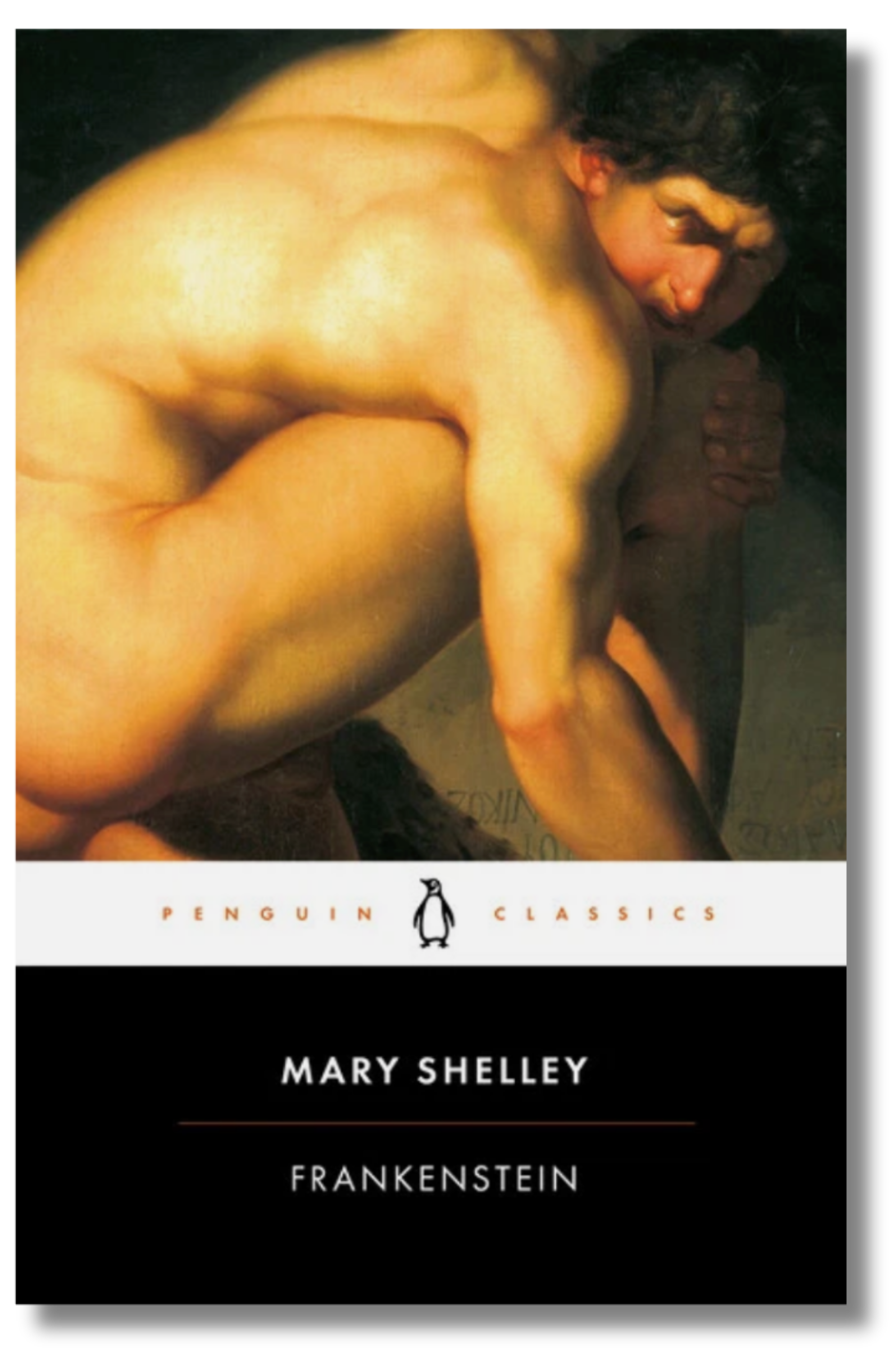
Frankenstein,Frankenstein, by Mary Shelley, Penguin Classics Edition
- The Penguin Classics edition is based on the third edition of the novel, published in 1831, which includes an introduction and notes by Maurice Hindle, all the revisions Mary Shelley made to her story, as well as her 1831 introduction and Percy Shelley’s preface to the first edition.